
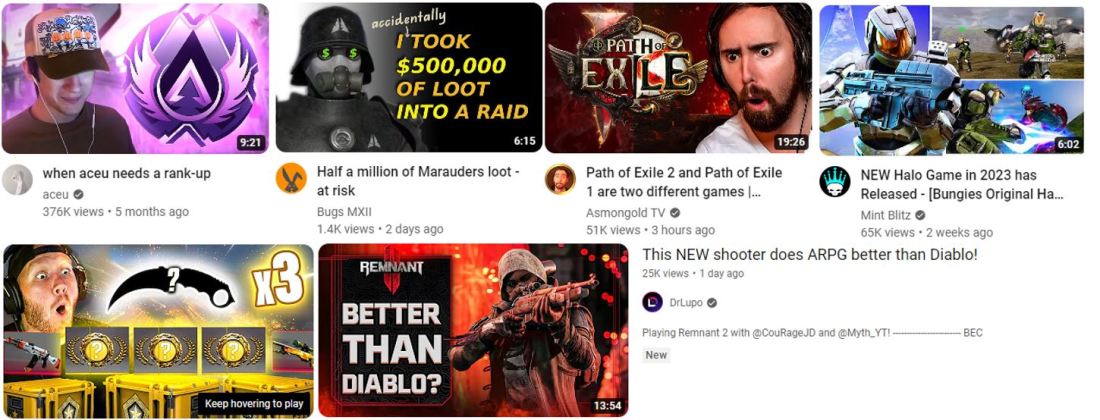
The video game industry has been booming over recent years with immense growth in the esports industry, total concurrent players, and an increase in the audience size of streamers. Much of this bolstering success can be attributed to the COVID pandemic with many people finding themselves at home with nothing to do. Not only is the act of playing video games growing even more mainstream, the idea that someone would enjoy consuming content and livestreams of their fellow gamers maintains consistent growth. Many feel that content creators are blessed with the ultimate gig. They are paid to play video games to their hearts delight, just as many of us do each and everyday. The only difference being, only one of us is being paid, often handsomely, to play the games that we love. As the art of content creation progresses, content creators have increasingly had an impact on the games we love and the end product that we experience.
“A content creator is someone who creates entertaining or educational material to be expressed through any medium or channel.”
Adobe
Your name may not be Frank but I’m about to be frank with you. Much of this article is invested in describing the negative effects content creators have on the gaming space. In the spirit of positivity, I’d like to start off by delving into some positive factors.
I very much align with Microsoft’s stance on how “when everybody plays, we all win.”
The representation of content creators in mainstream media may inject a new perspective of gaming into the lives of those external from the gaming space. The content creators themselves may challenge an outsiders viewpoint of the average gamer, demystifying the idea that all gamers are pimple ridden basement dwellers. I find that many people are surprised by the wide variety of people that game and create content. Further engagement with mainstream media may encourage other members of society to invest their time into gaming, especially if they are witnessing someone similar to themselves describing why they game.
Once a content creator has developed their own community, they can have a positive effect on the thousands of people that watch them play their favorite games. Content creators can create meaningful connections with their community and build a space where people suffering from loneliness may find refuge in the shared gaming experience with the content creator and the community. This shared experience will also promote engagement within the community which may harbor new friendships and connections. Fostering a community in this way can drive a positive experience in an often toxic environment.
With several of the positive factors now summarized, I’d like to dive deeper into the negative consequences found when a select few often drive the mannerisms of thousands of gamers. There was a time when only those equipped with obscure recording devices could capture their gaming moments and share them on the internet. This cost of entry prevented many from sharing their own clips, allowing the focal point to remain on their own gaming experience rather than collecting gaming content to share with the world.
With the advent of new features such as Xbox’s “capture & share,” it is now easier than ever for gamers to do just that. Players capture and share footage from their daily gaming sessions from their perspective platforms. This, along with other factors, have led gamers to focus on the flashy aspects of their gaming rather than focusing on their own enjoyment, skill, or victory.
Content creators exasperate this direction by merely engaging in their own profession of creating content. By constantly churning out content that focuses on their top plays and “unique” matches they are sending the message that you can’t enjoy a game without participating in the idea of striving for the individuals own top play, even if it sacrifices the actual victory in-game. Gamers no longer want to perform the simple actions required within games to actually come out victorious because their favorite content creator would never do such a thing. This is especially prevalent in games such as Tom Clancy’s Rainbow Six Siege which is a strategy intensive game. Players are less likely to engage with the more “boring” aspects of the game which are integral to success.
We are merely at the top of the content creator funnel. You can take this idea one step further and consider the gamers creating joke content where you are actively hurting the experience of the other people on your team in order to ragebait.
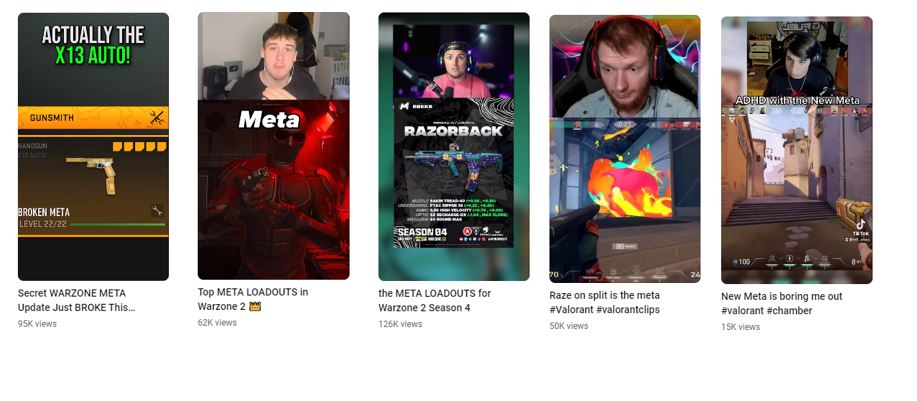
The Meta
The exhausting nature of following “the meta” has painfully diluted the player versus player experience in a multitude of games. I love the incredibly competitive nature of many games. Yet, the moment I am forced to adhere to the meta in order to simply compete in the matches, I lose interest.
We as gamers have lost the inspiration and almost child-like wonder found in discovering a video game for ourselves. Now gamers are almost incentivized to visit third part websites and tools to research what the meta weapons are for a video game. Let’s take Warzone 2 as an example. Warzone 2 features over 60 weapons to choose from which is a large sandbox for players to toy with. Unfortunately, many are driven to websites such as wzranked.com which provides an updated weapon list, ranging from S to D tier.
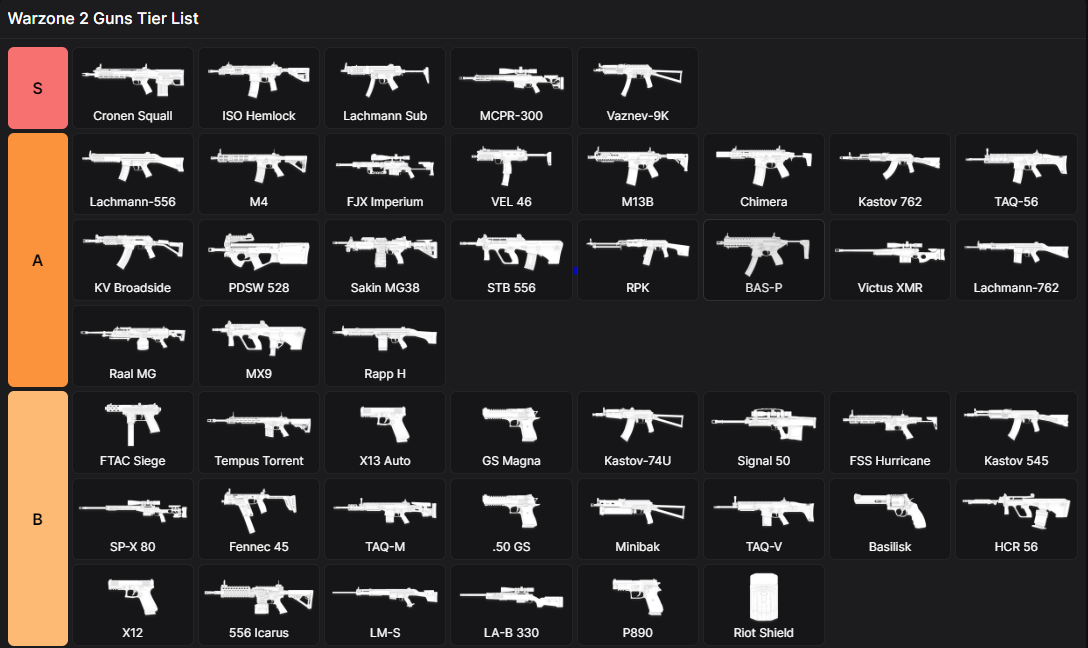
You’ll find detailed statistics for each weapon when you select one from the chart. The insane attention to detail is commendable and unlike much of what we’ve seen before in multiplayer shooting games. Sadly, many systems such as this override players desires to explore the game for themselves, creating a stale experience for everyone involved. This stale environment is created by a domino affect. If a large group of players are using the meta weapons, then the other players are forced to equip these same weapons just to have a chance without having to completely outplay their opponents.
Content Creators such as TimTheTatman amplifies this phenomenon by churning out content of all kinds focused on, “is this the new meta weapon in Warzone 2?”
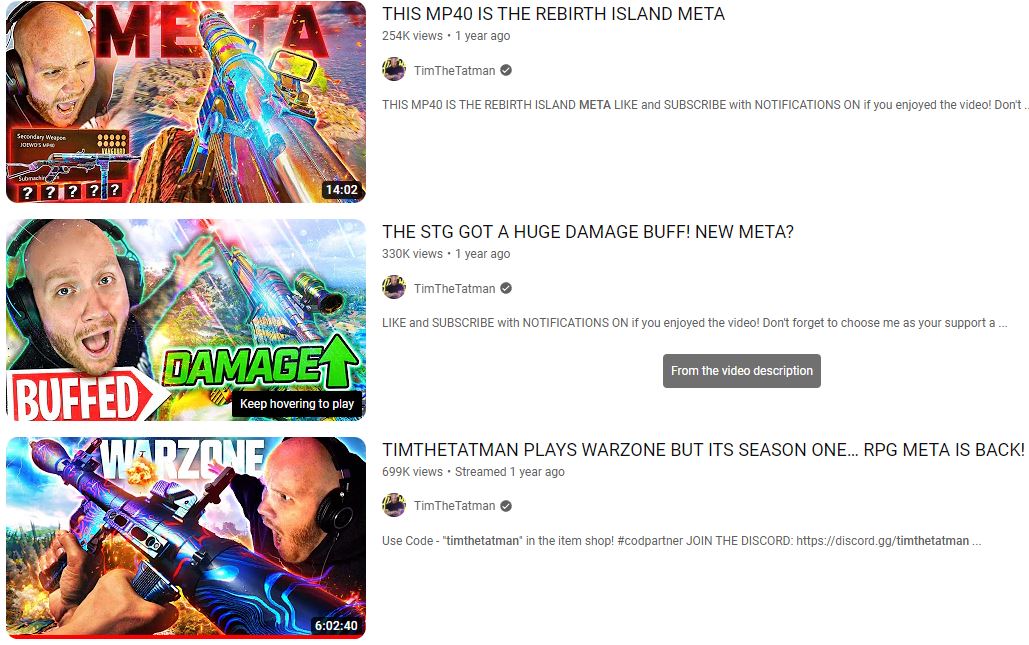
I first started watching TimTheTatman winter of 2016. Tim was ankle deep in his roots, playing Overwatch and raging at his teammates. Tim’s overwhelming success has impacted his ability to publish more content and make more money. Unfortunately, the way he expedites his content creation is by interrupting his livestream, and the enjoyment of his viewers, to record intros for his new YouTube videos. From there, an editor clips an entire livestream and transforms it into video format. If you caught it live, there is no reason (at least in my mind) to watch this content again. Instead, my recommended feed is flooded with content that I’ve already consumed.
Gaming Content Consumption
When game developers are meticulously working on their game, they are crafting an experience with a target audience in mind. The average gamer lacks the hardcore drive that many streamers and non-streamers alike tout in their gameplay, content, or commitment to the game. On average, workers invest 40 hours of their week into work. Applying this streaming and content creation, streamers need to somehow or someway devise a strategy to do “something” for forty hours a week. Not all streamers follow this logic but for the sake of this article, I will be sticking to this idea. Many streamers focus on a singular game to focus on. This focus comes in daily livestreams or other forms of content such as video. When a streamer is investing 40 hours of their week in a select number of games, their perspective of the game will be immensely skewed compared to the average gamer. Thus, rushing through the content and unlocking everything very quickly. This results in streamers complaining about the said game, claiming there isn’t enough to do when in reality, they are playing it at an accelerated pace that the developers cannot simply keep up with. From there, the content creators draft content that informs their viewers of their perspective, which will most likely be negative. This consumption of gaming content forces game developers to be at an impasse for how they design their game. Do they release their game targeting the average consumer only to risk negative PR from large streamers or do they pad their game with fluff, such as battle passes or horrible progression systems, in order to appease the minority of gamers who create content for a living? The influx of battle passes into almost every gaming experience may be the direct result of content creators driving the narrative that there isn’t enough to do in a particular video game. Instead of curating a meaningful gaming experience, video game developers tout seasonal battle passes that extend the playtime of every gamer.
Content Creators are consuming gaming content at an unsustainable rate which has a direct impact on their experience and the experience they portray to their audience. This encourages the content creator to develop negative content geared towards the game they are playing. As a lifelong gamer, I feel that the most noticeable impact of the content creator affect is demonstrated through the Warzone experience. Activision churns out a steady stream of content for those that dabble in the Call of Duty experience. Included in the release of every battle pass are new weapons. More often than not, these new weapons are far superior to the current weapons offered in the game. This negative impact is more of a collaborative effort between content creators and Activision as it greatly benefits the developers of the game through an increase of in-game transactions. If a weapon, battle pass or not, is deemed “the meta” weapon by a majority of content creators then you will find the entire Warzone lobby flooded with that same weapon. This entirely removes the variety and unique firefights of what makes many first person shooters great. I was originally inspired to write this article because of how boring the entire experience is with the game. Gamers have lost their ability to experience a game for themselves and instead look upon their favorite content creator to do the thinking for them. Unfortunately, this robs them of a, hopefully, positive gaming experience and robs anyone in the lobby of the ability to do much other than join them in using the overpowered weapons.

 Geoff W - A Space To Myself